
Eye Emergency Warning Signs to Never Ignore
A red, irritated eye after a long day is usually just that - irritation. A sudden curtain over your vision, a shower of new floaters, or sharp eye pain is something else entirely. Knowing the eye emergency warning signs can make the difference between prompt treatment and lasting damage, particularly when vision is involved.
Eye emergencies are not always dramatic in the way people expect. Some begin with subtle changes that are easy to dismiss - a blind spot that seems to come and go, a light sensitivity that feels out of character, or a child who suddenly cannot tolerate bright rooms. The eye is delicate, and when symptoms arrive quickly, the safest assumption is not to wait and see.
Why eye emergency warning signs matter
Vision is remarkably precise and, in some situations, remarkably vulnerable. Problems involving the retina, optic nerve, cornea or eye pressure can progress quickly. Hours matter more than many people realise.
There is also a practical issue. Many urgent eye conditions do not look severe from the outside. The eye may appear only mildly red while something serious is happening deeper within. That is why the symptom itself often matters more than appearance. If your vision changes suddenly, if pain escalates, or if trauma is involved, urgency should rise with it.
The eye emergency warning signs that need urgent attention
Sudden loss of vision
Any sudden reduction in vision, whether complete or partial, deserves immediate attention. This includes blurred vision that comes on quickly, loss of side vision, a dark area in the centre of sight, or the feeling that a shadow or curtain has moved across the eye.
The causes vary. It could be a retinal tear or detachment, bleeding inside the eye, a problem with circulation, acute glaucoma, or inflammation affecting important eye structures. The exact diagnosis depends on the pattern of symptoms, but the rule is simple - sudden vision loss is not one to monitor at home.
Flashes, a burst of floaters, or a shadow in your vision
A few stable floaters that have been there for years are common. A sudden shower of floaters, especially when paired with flashing lights or a grey shadow, is different. These can be signs that the vitreous is pulling on the retina or that the retina has torn.
Not every new floater means an emergency, but this is one of those situations where it depends on the speed and combination of symptoms. One or two new specks may be less concerning than dozens appearing at once with flashes. The presence of a curtain-like shadow raises the level of concern significantly.
Significant eye pain
Mild discomfort from dryness or tired contact lenses is familiar to many people. Severe pain, deep aching, pain with nausea, or pain that worsens with light exposure needs a more urgent response.
Acute angle-closure glaucoma is one example. It can cause severe pain, blurred vision, halos around lights, headache, and sometimes vomiting. Corneal abrasions, infections and internal inflammation can also be intensely painful. When pain feels out of proportion, trust that signal.
Red eye with reduced vision or light sensitivity
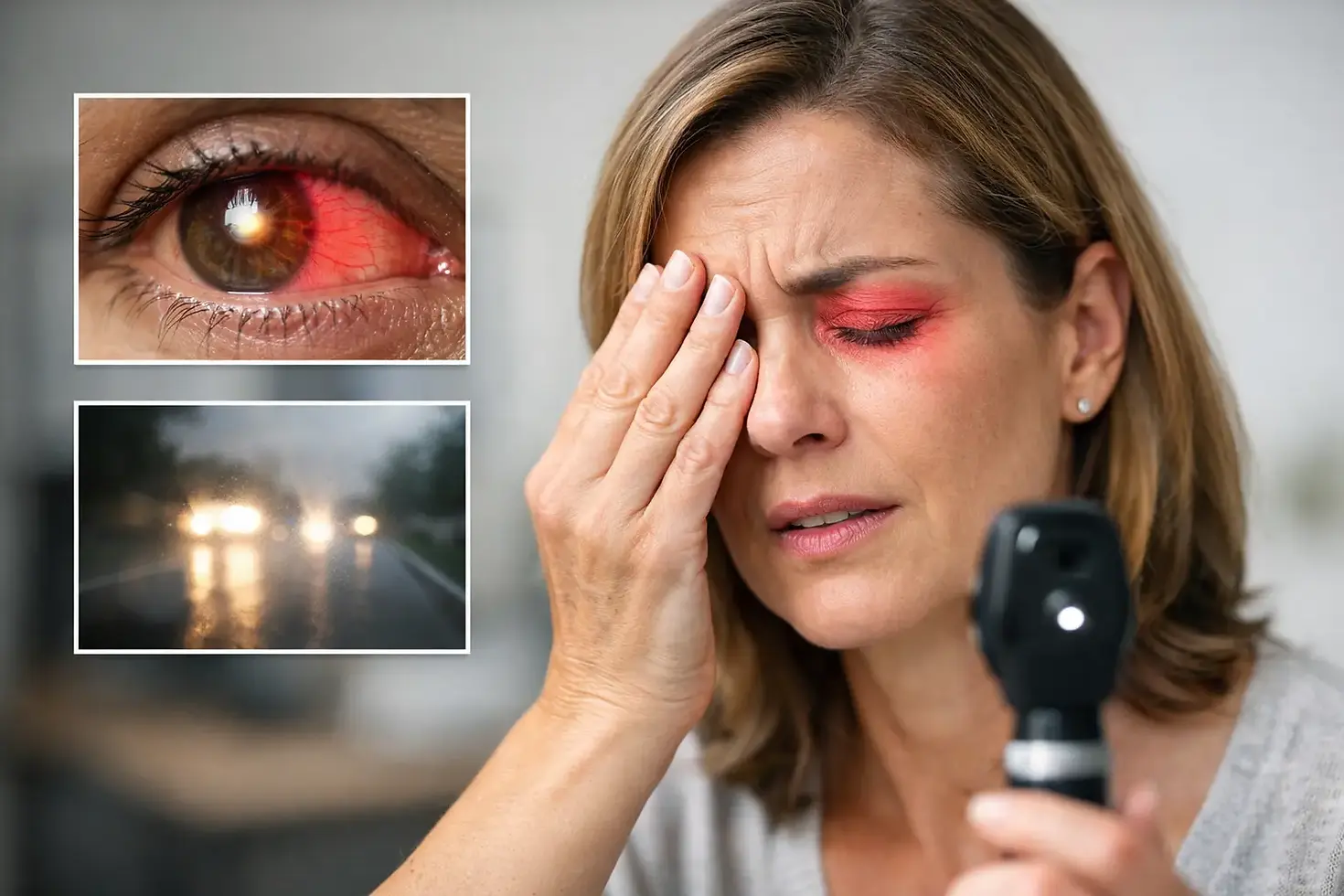
A red eye on its own may be relatively minor. A red eye combined with blurred vision, marked sensitivity to light, or pain is much less reassuring. That pattern can point to corneal infection, uveitis, acute glaucoma or a more serious inflammatory process.
Contact lens wearers should be particularly careful here. Sleeping in lenses, swimming in them, or wearing them beyond schedule increases the risk of corneal infection. These infections can threaten sight quickly, so a painful red eye in a lens wearer should never be brushed aside.
Eye injury or chemical exposure
Any direct trauma to the eye should be taken seriously, even if the eye looks acceptable in the first few minutes. A sporting injury, a flying fragment during home repairs, or a child’s accidental poke can lead to corneal damage, internal bleeding, raised eye pressure or more complex injury.
Chemical splashes are especially time-sensitive. Detergents, cleaning products, solvents and garden chemicals can all cause severe injury. The first step is immediate irrigation with clean water, and after that, urgent assessment is essential. In these cases, speed matters more than perfection.
Less obvious signs people often underestimate
Not every eye emergency presents as pain or dramatic vision loss. Some of the more easily minimised symptoms are still worth urgent assessment.
Double vision that starts suddenly
New double vision can indicate a problem with the muscles controlling the eye, the nerves supplying them, or the brain’s visual pathways. Sometimes the cause is less urgent, but because the range of possibilities includes neurological issues, sudden double vision should not be left to chance.
A sudden droopy eyelid with other symptoms
A droopy eyelid by itself may have a benign explanation. When it appears suddenly with unequal pupils, pain, double vision or headache, it needs prompt review. The eyes often provide early clues to broader medical problems, and those clues deserve respect.
New pupil changes
A pupil that becomes markedly larger, smaller, or irregular compared with the other eye can indicate trauma, inflammation, glaucoma, nerve involvement or medication effects. If this appears without a clear reason, urgent advice is sensible.
Children who avoid light or stop using one eye normally
Children do not always describe visual symptoms clearly. A child who covers one eye, squints suddenly, becomes unusually clingy in bright light, or complains of pain may need urgent care even if the eye does not look dramatic. Parents often notice behaviour changes before obvious physical signs.
When it may be urgent, but not necessarily an emergency department problem
There is nuance here. Some eye issues are urgent and require same-day optometric or ophthalmic assessment, but not every case belongs in a hospital emergency department. A scratched cornea, new flashes and floaters, or a painful red contact lens eye often need prompt specialist eye care rather than delay.
That is where experienced triage matters. An optometrist can determine whether the issue can be managed in practice or needs immediate referral for hospital or ophthalmology treatment. For patients in Chatswood and the North Shore who value careful, personalised care, this kind of guidance is part of good clinical service - calm, precise and responsive.
What to do if you notice eye emergency warning signs
First, do not drive yourself if your vision is affected. Ask someone to take you or arrange urgent transport. If you wear contact lenses, remove them unless there has been chemical exposure and you are flushing the eye immediately.
Do not rub the eye, particularly after trauma. Do not patch it, and do not use leftover eye drops unless specifically advised. Steroid drops in the wrong situation can make an infection much worse. If a chemical has entered the eye, begin rinsing straight away with plenty of clean water and continue while seeking urgent help.
It is also worth noting what happened and when. Did the symptoms begin instantly or build over hours? Was there an injury, new medication, recent illness or contact lens over-wear? Those details help guide urgency and diagnosis.
Eye emergency warning signs and contact lenses
Contact lenses are a sophisticated visual solution, but they demand respect. A beautifully fitted lens should feel almost invisible. Once pain, redness, tearing or blurred vision appear, the lens should come out and the eye should be assessed promptly.
The risk is not simply discomfort. Contact lens-related corneal infections can progress quickly and, in serious cases, leave permanent scarring. This is one of those situations where waiting until tomorrow can be a poor bargain.
The value of acting early
With eye symptoms, people often hesitate because they worry about overreacting. That instinct is understandable, but vision is not an area where false economy serves anyone well. A timely examination may reveal something minor and treatable. If the problem is more serious, early intervention offers the best chance of preserving sight.
In a practice setting that values both clinical rigour and refined personal service, urgency does not need to feel chaotic. It can be handled with clarity, discretion and expertise. Proview Optical understands that eye care is deeply personal - not only because sight matters, but because confidence and comfort do too.
If something about your vision feels suddenly wrong, treat that feeling with the seriousness it deserves. Eyes rarely ask for help politely, and the wisest response is often the prompt one.


Comments